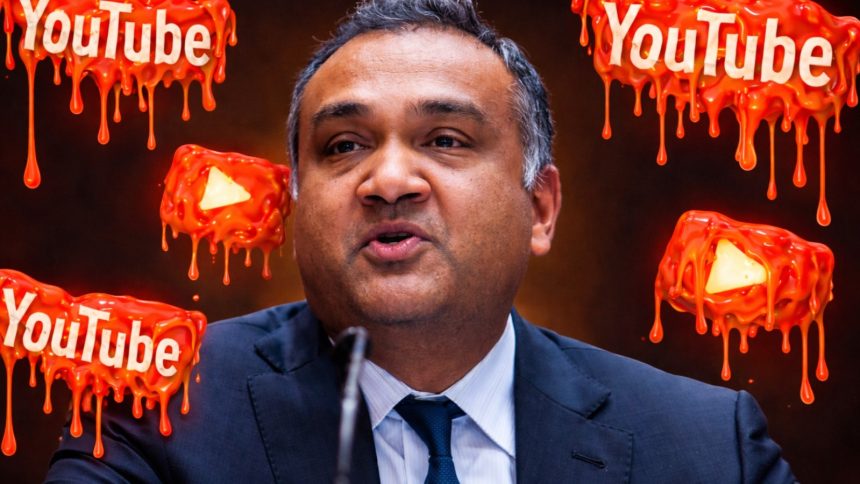

YouTube CEO Neal Mohan is taking aim at “AI slop” and has big plans to combat the controversial content that is making some creators millions of dollars.
With the rise of AI video, many creators across YouTube and other platforms have begun posting AI-generated clips and are building a significant following.
In fact, according to a study by Kapwing, over 20% of YouTube is made up of AI content. India’s Bandar Apna Dost dominates the AI content boom, amassing more than 2.07 billion total views across its uploads and pulling in an estimated $4.25 million annually, making it the most successful channel in the space.
The money extends far beyond major pages. In August, a 21-year-old computer science student from the Philippines disclosed that he earned roughly $9,000 in just one month by creating AI-generated cartoon kitten videos.
Amid this rise, YouTube’s boss has put his foot down and is promising to tackle this issue, all while simultaneously embracing AI for content moderation and creation.
YouTube CEO takes aim at low-quality “AI slop”
In Mohen’s annual letter to the YouTube community, the CEO revealed an assortment of plans for 2026, including letting YouTubers make AI Shorts using their own likeness.
On the topic of AI slop, however, he didn’t hold back and slammed what he labeled “low quality” content.
“The rise of AI has raised concerns about low-quality content, aka ‘AI slop.’ As an open platform, we allow for a broad range of free expression while ensuring YouTube remains a place where people feel good spending their time,” he wrote.
While Mohen noted that the platform has learned not to impose preconceived notions on the creator ecosystem, citing “odd trends” like ASMR and watching people play video games, the platform has a “responsibility to maintain the high quality viewing experience that people want.”
The YouTube boss vowed to reduce AI slop by expanding the same tools responsible for content moderation.
“To reduce the spread of low quality AI content, we’re actively building on our established systems that have been very successful in combatting spam and clickbait, and reducing the spread of low quality, repetitive content,” he explained.
It should be noted that YouTube’s AI moderation has come under in recent months after numerous creators reported being falsely flagged by the system.
In one instance, the system mistook a streamer’s microphone for a weapon and subsequently shut down a live broadcast.
In another viral case, SpooknJukes had his video restricted after his laugh was marked as “graphic content,” and it wasn’t until he removed his laugh from the footage that his video could be fully monetized again.
We’ll have to see how YouTube improves upon these systems over the year, especially with Mohen saying viewers should expect to see “a lot more investment” into those areas.