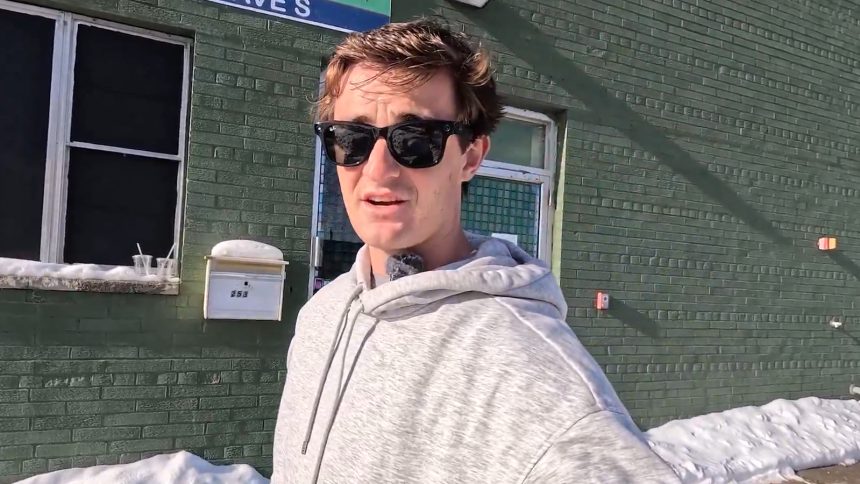

Questions are being raised about Minnesota’s childcare assistance system after widely shared videos from independent journalist Nick Shirley alleged that some daycare centers received millions of dollars in public funding despite appearing inactive or closed.
The claims focus on payments made through Minnesota’s Child Care Assistance Program, or CCAP, which helps eligible families cover childcare costs. One Minneapolis daycare featured in videos is shown with darkened windows, no visible staff or children, and signage that appears outdated or damaged, while on-screen records are presented alleging the facility received significant government reimbursements.
Shirley claims the daycare received approximately $1.9 million in CCAP-related funding in 2025. The videos also show what are described as billing records, with repeated payment entries highlighted as evidence.
In one clip, Shirley documents an interaction in which he says he was unable to enroll a child at the facility, which he argues suggests the center may not be actively operating.
The allegations have not been independently verified by authorities, and no charges have been announced related to the specific daycare shown. State and federal agencies have not publicly confirmed the figures cited in the videos or commented on the operational status of the facility.
In a 42-minute video, Shirley visited several daycares in Minnesota, some licensed for 80-99 children, but found no children on campus. A man name David, who has been privately investigating these daycares for years, corroborated these claims.
In perhaps the most viral clip from the investigation, Shirley visits a facility named the “Quality Learning Center,” spelling incorrectly as “Learing” on the sign. There are no cars or workers, despite allegedly being filmed mid-day during a weekday.
Shirley wrote. “In one day my crew and I uncovered over $110,000,000 in fraud, this is just the tip of the iceberg.”
Supporters of the videos argue they highlight potential weaknesses in how childcare assistance funds are monitored, while critics have cautioned that online footage alone does not establish wrongdoing and that formal investigations are required to determine whether any laws were broken.