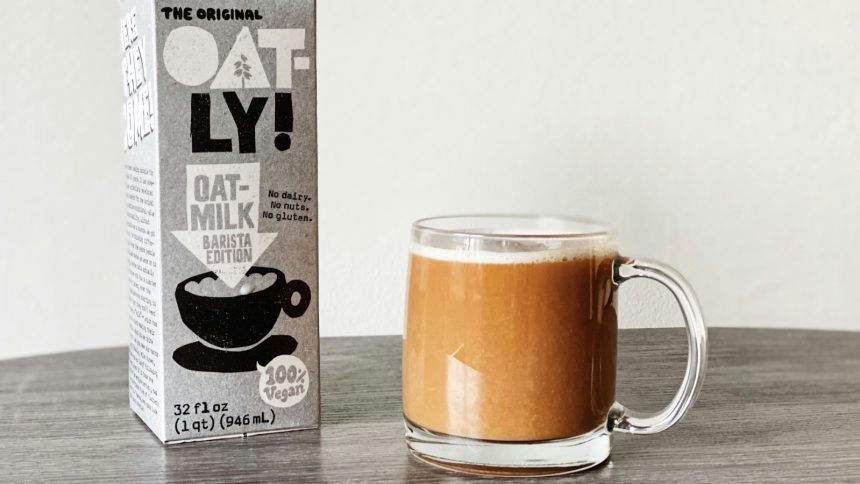

A long-running legal battle over plant-based branding has reached its conclusion in the UK, with the country’s highest court siding against Swedish drinks brand Oatly.
The ruling follows years of disputes between the company and the dairy industry over whether oat-based products can legally use the word “milk” in marketing and trademarks.
On Wednesday, the UK Supreme Court unanimously decided that Oatly can no longer trademark or use the slogan “Post Milk Generation,” bringing the case to a close after multiple appeals through lower courts.
Why Oatly lost its trademark fight
“It has taken the highest court in the land to decide once and for all whether a plant-based milk alternative can be branded as ‘milk’ and marketed as such,” said Laurie Bray, a senior associate and trademark attorney at European intellectual property firm Withers & Rogers. “And the outcome is not what Oatly was hoping for.”
Under existing regulations, certain product terms can only be used to describe the goods they originate from, including milk, wine, and olive oil. Milk is legally defined as coming from animals in the dairy sector.
Oatly first applied to trademark the phrase “Post Milk Generation” with the UK Intellectual Property Office in 2019, with the registration granted in 2021. The company argued that using the word “milk” in a trademark did not breach regulations if it was not being used descriptively.
That argument was rejected in 2023 after an objection from trade body Dairy UK, with the Intellectual Property Office ruling the wording was “deceptive.” Oatly successfully appealed that decision in December 2023, but the Court of Appeal later overturned the ruling, prompting the company to escalate the case to the Supreme Court.
“This ruling is an important decision for the sector as it finally provides clarity on how dairy terms can and cannot be used in branding and marketing,” said Dairy UK chief executive Judith Bryans. “It brings greater certainty for businesses and helps ensure that long-established dairy terms continue to carry clear meaning for consumers, while allowing appropriate descriptors to be used where the law permits.”
Despite the outcome, Oatly said it strongly disagreed with the decision.
“This decision creates unnecessary confusion and an uneven playing field for plant-based products that solely benefits Big Dairy,” said Bryan Carroll, general manager for Oatly UK & Ireland. “In our view, prohibiting the trademarking of the slogan ‘Post Milk Generation’ for use on our products in the UK is a way to stifle competition and is not in the interests of the British public.”
Carroll added that the company intended to “find a way to get our ‘Post Milk Generation’ merchandise into the hands of our brilliant community.”
Legal experts say the judgment could extend beyond a single brand. The decision may allow equivalent trade bodies in other European countries to challenge similar trademarks, while the same rules apply to dairy-derived terms such as cream, butter, cheese, and yoghurt.
“For plant-based producers, the safer course is to use clearly descriptive alternatives such as ‘oat drink’ or ‘plant-based drink’,” said Richard May, a partner at law firm Osborne Clarke.
“More broadly, the judgment signals that UK regulators and courts are likely to take a robust approach to so-called ‘category borrowing’ across regulated sectors. Businesses building brands around legally defined product names, whether in dairy or elsewhere, should expect scrutiny and plan their brand strategy accordingly.”
Back in 2024, the Ohio Supreme Court ruled that boneless wings can actually have bones in them after a customer tore his esophagus while eating one.