
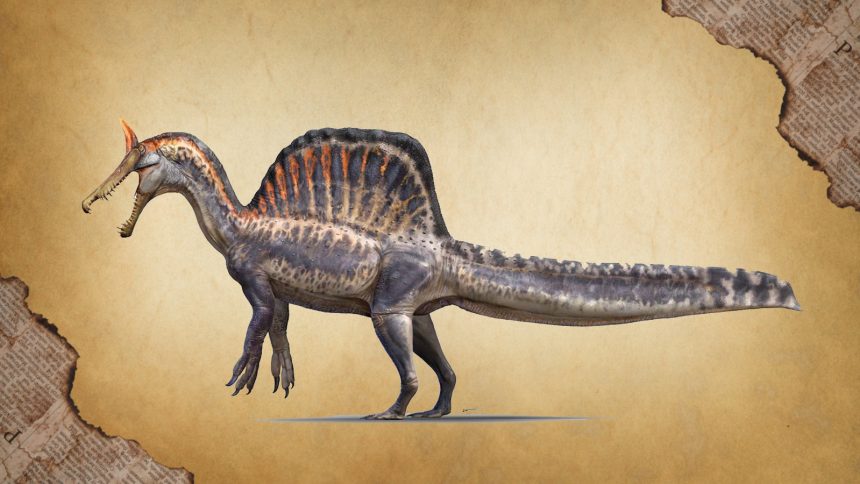

Scientists have officially discovered a new species of Spinosaurus called Spinosaurus mirabilis after fossils were uncovered in Niger’s Sahara Desert, marking the first new species in the genus in more than a century.
The remains were found at a remote site called Jenguebi in central Niger during a 2022 expedition led by University of Chicago paleontologist Paul Sereno, according to reporting from Reuters and the university. Researchers say the dinosaur lived around 95 million years ago and measured roughly 10 to 14 meters (about 33 to 46 feet) long, putting it in the same size range as Tyrannosaurus rex.
A major clue that separates S. mirabilis from other spinosaurs is its towering, blade-like skull crest, about 20 inches (50 cm) high, which has led to the “scimitar-crested” nickname. Scientists think it was likely covered in keratin and used for visual display, such as attracting mates or warning off rivals.
Spinosaurus described as a “hell heron”
Sereno has likened the animal to a “hell heron,” arguing it was probably a wading ambush predator that hunted in shallow water rather than a fully aquatic pursuit hunter. That idea is partly supported by where the fossils turned up, hundreds of miles inland in deposits linked to ancient rivers and wetlands.
The study also highlights a specialized jaw and tooth setup. Researchers describe interlocking, zipper-like teeth that would have helped trap slippery fish, an adaptation they say is unusual among known dinosaurs.
The research was published in Science on February 19, 2026, as scientists continue to debate how spinosaurids lived and evolved across North Africa’s changing environments.
Fans will be able to see replicas soon, too. The University of Chicago says casts of the skull and a reconstructed crest are scheduled to go on display at the Chicago Children’s Museum starting March 1, 2026.