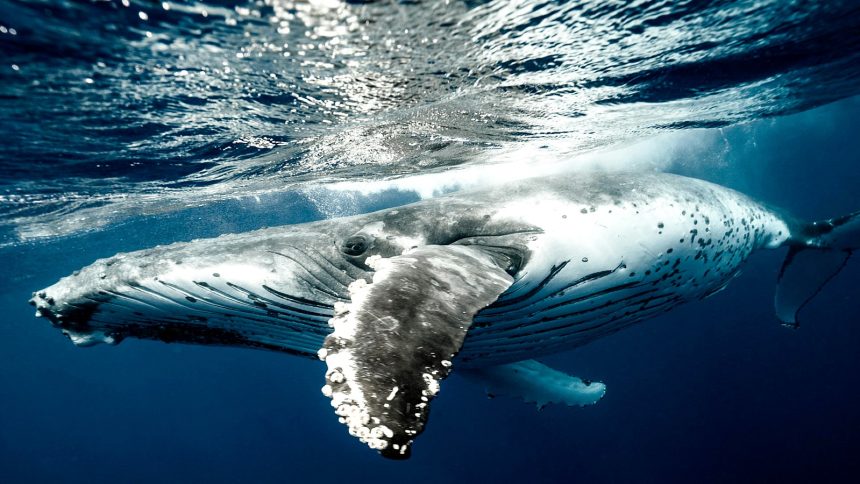

Scientists have detected a known but dangerous virus in the breath of whales after collecting samples with drones, offering a new way to monitor marine wildlife health without direct interference.
The discovery came after researchers flew drones through the mist exhaled by whales as they surfaced to breathe.
Analysis of the samples revealed the presence of cetacean morbillivirus, a virus that’s been linked to serious illness and death in whales and dolphins.
Known virus detected in a new way
According to researchers from King’s College London and partner institutions, this is the first time cetacean morbillivirus has been identified directly from whale breath collected in the wild.
Cetacean morbillivirus is known to attack the respiratory, nervous, and immune systems of whales and dolphins, and has been associated with major mortality events in the past. The researchers stressed that the whales sampled during the study did not show obvious signs of illness.
Using drones allowed the team to collect samples without close contact or invasive procedures, which have historically made disease monitoring in whales difficult and risky. By keeping a distance, scientists were able to gather biological data while the animals behaved naturally in their environment.
The researchers say the method could become a useful tool for tracking how viruses spread among whales and detecting outbreaks earlier.