
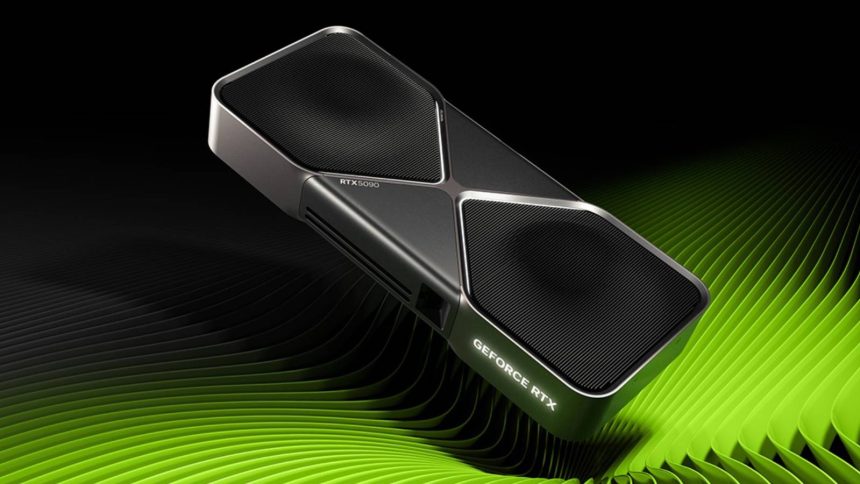

Nvidia is reportedly preparing to cut production of its GeForce RTX 50 series GPUs in early 2026, according to multiple industry reports, raising concerns about future supply and availability.
The reported changes would impact Nvidia’s consumer graphics card lineup during the first half of 2026, with production reductions said to be tied to ongoing memory shortages affecting the broader PC hardware market.
According to reporting from Benchlife, Nvidia is expected to reduce GeForce GPU production by as much as 30 to 40 percent. The cuts are reportedly linked to shortages across multiple memory types, including GDDR7, rather than being limited to a single component.
Nvidia reportedly planning major cuts to GeForce GPU output
The report suggests Nvidia may be unable to secure enough memory to sustain current production levels. An alternative explanation cited is an expectation of weaker GPU demand in 2026, potentially driven by rising NAND and DRAM prices that could push overall PC costs higher.
Notably, the reported production cuts appear to focus solely on Nvidia’s GeForce lineup. There has been no mention of reductions affecting RTX PRO series GPUs. If GDDR7 supply is constrained, Nvidia could be prioritizing memory allocation for its higher-margin professional GPUs over consumer-focused models.
Benchlife claims Nvidia plans to begin scaling back production by targeting specific models, including the RTX 5060 Ti 16GB and RTX 5070 Ti. Both cards use the same memory capacity as higher-end GPUs like the RTX 5080, which are sold at significantly higher prices. Redirecting memory from these mid-range cards could allow Nvidia to increase the output of more profitable models.
The report also notes that DDR5 memory prices remain elevated, a factor that could further influence GPU manufacturing strategies across the industry. If these trends continue, GPU makers may increasingly favor lower-memory configurations or higher-margin products with limited availability.
Back in November, Nvidia reported yet another record-breaking quarter due to AI demand, and the GPU maker revealed it has shifted from being gaming-focused to becoming an AI data center giant.